
A useful self-defence class for an 8-11-year-old should teach skills in manageable stages, explain how partner practice and contact are controlled, and give parents clear answers about supervision and safeguarding. Ask what beginners do before assuming that self-defence means immediate sparring.
Kids’ self-defence classes should help an 8-11-year-old learn progressively, practise with clear boundaries and understand when a skill is appropriate. They should not rely on fear, promise that a child will always be safe, or leave parents guessing about contact and supervision.
Andrew Rheeston’s Martial Arts Academy offers a dedicated Martial Arts for Ages 8-11 programme at North Solihull Sports Centre in Chelmsley Wood. Its current public description combines self-defence with martial arts tradition, but it does not publish a detailed syllabus, timetable or sparring policy. That makes a conversation and a real trial more useful than assumptions based on the words “self-defence”.
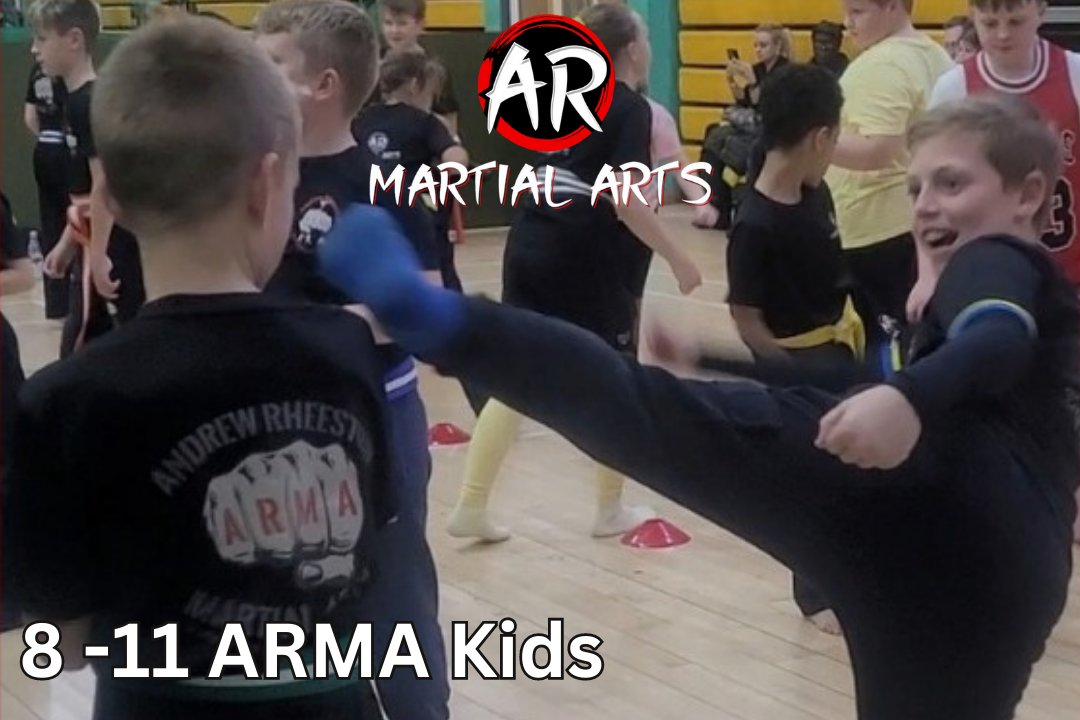
What can self-defence mean in a children’s class?
There is no single lesson plan used by every martial art or school. For children aged 8-11, the phrase can cover several kinds of learning:
- movement, balance and keeping an appropriate distance;
- listening and responding to clear instructions;
- striking or defensive movements practised on pads;
- controlled partner drills with defined roles;
- recognising when to stop and ask an adult for help; and
- understanding that avoiding or leaving a situation can be the right response.
This is general guidance, not a description of an unpublished AR Martial Arts syllabus. Ask the academy which elements appear in its 8-11 sessions and how the content changes as a child gains experience.
Self-defence training also cannot guarantee an outcome in a real incident. A responsible explanation should be honest about the limits of practice and should never suggest that learning a few techniques makes a child invulnerable.
Does self-defence mean my child has to spar?
Not automatically. Pad work, set partner drills and sparring are different activities, even though a school may use more than one of them. The word “sparring” can also mean different things across styles and organisations.
AR Martial Arts does not currently publish an ages 8-11 sparring policy. Before booking, ask:
- What partner work does a complete beginner do?
- Is any contact optional or introduced only after specific preparation?
- How are partners matched by age, size, experience and the needs of the drill?
- What protective equipment is used, and when?
- Who supervises the activity and how is a drill stopped?
- What happens if a child feels uncomfortable or wants to sit out?
A clear answer should explain the purpose of an activity, the boundaries around it and how the instructor adapts it for a beginner. “They will be fine” is not a useful substitute for detail.
What should good supervision look like?
Good supervision is more than having an adult in the room. The coach needs to be able to see what is happening, give suitable instructions and change or stop an activity when necessary.
UK Coaching’s safe-practice guidance says that age, experience, the available space and equipment, and the risk involved in physical contact all affect safe supervision. It also emphasises appropriate instruction, risk management and first-aid provision.
For a parent watching a trial, useful signs include:
- instructions are demonstrated and checked for understanding;
- children know where to stand and when to begin or stop;
- partner drills have a specific goal rather than becoming uncontrolled;
- the instructor notices when a child is confused, tired or uncomfortable;
- corrections are calm and specific; and
- questions from children and parents are welcomed.
These observations do not prove every policy is in place, but they help you ask better follow-up questions.
Which safeguarding questions should I ask?
Safeguarding and technical coaching are related but not identical. A well-taught drill does not replace clear club procedures.
The Child Protection in Sport Unit’s five questions for sports clubs ask whether staff have been checked, whether the club has a safeguarding policy, what happens after an accident, who parents can speak to and what training is in place.
Sport England’s Safeguarding Code in Martial Arts overview is another useful general benchmark. It covers policy, reporting procedures, codes of conduct, education and training, and ongoing monitoring. Linking to that framework is not a claim that AR Martial Arts holds the code; the academy’s current public sources do not verify that status.
Ask AR Martial Arts directly for its current answers and evidence. Do not infer a safeguarding credential from the academy’s use of a public leisure centre, and do not assume the venue operator manages the club’s coaching policies.
How can we use the free week well?
AR Martial Arts currently offers one week of classes free. For an 8-11-year-old, use that time to assess the experience rather than looking for instant transformation.
After each session, ask your child simple, open questions:
- What did the instructor ask you to practise?
- Did you know how to stop the drill?
- What felt comfortable or uncomfortable?
- Who would you speak to if you were worried?
- Is there something you would like explained before the next class?
Notice whether your child can describe the rules of an activity and whether the academy gives consistent answers to your questions. Confidence, focus, behaviour and safety cannot be guaranteed by a class, but clear coaching and a supportive routine can help you judge whether the programme is a sensible fit.
Where is the Chelmsley Wood programme?
AR Martial Arts trains at North Solihull Sports Centre, Conway Road, Chelmsley Wood, Solihull, B37 5LA.
The venue’s official page lists accessible parking bays, ramp access, automatic entrance doors, a hearing loop, lift access, accessible toilets and accessible changing facilities. Those are centre-wide facilities, not details of the academy’s training space. Contact both the academy and venue before attending if your child has a specific access requirement.
The academy does not publish a current timetable, class price or detailed 8-11 syllabus. Call before travelling to confirm the right session and ask the questions that matter to your family. You can also read the academy’s frequently asked questions before claiming the free week.
Frequently asked questions
Are self-defence training and sparring the same thing?
No. Self-defence training can include movement, awareness, pad work, controlled partner drills and other skills; sparring is a particular form of live practice. Content and terminology vary between martial arts, so ask the academy what the ages 8-11 group does and how beginners are introduced.
Does AR Martial Arts publish a sparring policy for ages 8-11?
The academy's current public information describes its ages 8-11 programme as combining self-defence and martial arts tradition, but it does not publish a detailed syllabus or sparring policy. Ask directly before attending so you can make a decision using current, programme-specific information.
Where are the ages 8-11 classes held?
AR Martial Arts trains at North Solihull Sports Centre, Conway Road, Chelmsley Wood, Solihull, B37 5LA. The academy does not publish a current class timetable, so contact it before travelling to confirm the appropriate session.
Can my child try the class before we join?
Yes. AR Martial Arts currently offers one week of martial arts classes free. Use the week to see how instructions, partner work and corrections are handled, and to ask any practical or safeguarding questions before making a longer commitment.