AR Martial Arts' Adult Martial Arts programme combines elements of Thai boxing, Jeet Kune Do (JKD) and Kali. Its public page mentions punches, kicks, knees, footwork and traditional weaponry, but it does not publish a week-by-week syllabus, so beginners should ask how those elements appear in the current class.
AR Martial Arts’ Adult Martial Arts programme combines elements of Thai boxing, Jeet Kune Do (usually shortened to JKD) and Kali. The academy’s current public page describes punches, kicks, knees, footwork and traditional weaponry, but it does not publish a week-by-week syllabus or say that every session contains every element.
That distinction matters for a beginner. The names explain where parts of the programme come from; they do not tell you exactly what you will do on your first night. The most useful next step is to read the Adult Martial Arts programme and ask how the current class introduces each area.
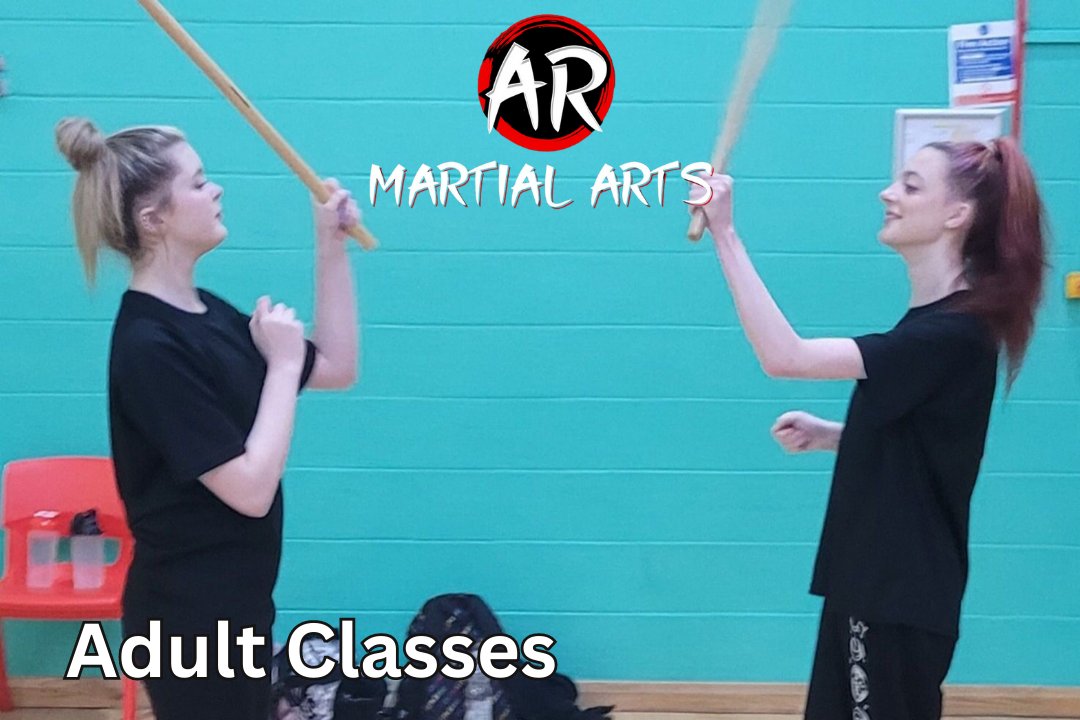
Why does one adult programme mention three martial arts?
AR Martial Arts describes this as a combined programme rather than three unrelated classes. Its public page says the mix is used to create a versatile striking system, with punches, kicks, knees and footwork alongside traditional weaponry.
The academy is also listed by MKG UK as MKG Birmingham, with Andrew Rheeston named as owner and head instructor. MKG UK’s public curriculum overview names Filipino martial arts, Muay Thai kickboxing and Jeet Kune Do Concepts. That supports the three-part description, but it still does not establish AR Martial Arts’ unpublished lesson order, contact level or equipment policy.
For a beginner, the practical question is not “Which art will I master first?” It is “What does the current beginner pathway ask me to practise, and how will the instructor explain why it is there?”
What does the Thai boxing element mean?
Muaythai is a Thai martial art and combat sport with its own history, culture and sporting rules. The International Federation of Muaythai Associations is a useful primary source for that wider background.
AR Martial Arts makes a narrower academy-specific claim: its Adult Martial Arts programme draws on Thai boxing and publicly mentions punches, kicks, knees and footwork. It does not say that the class follows competition rules, includes a particular amount of sparring or trains every Muaythai technique.
Ask what a complete beginner practises on pads, what partner work is involved and how intensity is controlled. Those answers should come from the current academy class rather than from a general definition online.
What is Jeet Kune Do (JKD)?
The Bruce Lee Foundation’s Jeet Kune Do overview explains that Bruce Lee named Jeet Kune Do in 1967 and centred it on simplicity, directness and freedom rather than a rigid, fixed system.
That is general history from a primary source. AR Martial Arts says that its programme includes JKD elements, but its public page does not list which drills, tactics or technical sequence it uses. A local class may draw on an art without claiming to teach every interpretation of it.
If JKD is the part that interests you most, ask Andrew which aspects appear in the beginner curriculum and how they connect with the Thai boxing and Kali material.
What is Kali, and does it always mean weapons?
Kali is a name used for Filipino martial arts. The Philippine Eskrima Kali Arnis Federation explains that Arnis is also known internationally as Eskrima and Kali, and describes an indigenous Filipino stick-fighting tradition.
AR Martial Arts’ public Adult Martial Arts page mentions both Kali and traditional weaponry. It does not identify the training tools, state that weapon work happens in every class or say when a beginner is introduced to it. It would therefore be inaccurate to promise that your first session includes weapon training—or that it cannot.
Before attending, ask:
- which equipment or training tools are used in the current programme;
- whether a beginner needs to bring anything;
- how any partner or weapon-based drill is introduced and supervised; and
- what alternative is available if you are not ready for a particular activity.
Is this mixed martial arts, or is it Wado Ryu?
“Combines elements” is a description of the curriculum. It is not enough evidence to call the programme an MMA competition class or to infer any particular ruleset.
It is also separate from AR Martial Arts’ Wado Ryu Karate programme. The Wado Ryu pathway is for someone specifically seeking karate; Adult Martial Arts is the mixed Thai boxing, JKD and Kali option. Neither label is automatically better for a beginner. The choice depends on which training approach you want to explore.
What should a beginner ask before the free week?
The current public information leaves several sensible questions open:
- Which parts of Thai boxing, JKD and Kali appear in a beginner’s first few sessions?
- Is pad work or partner work involved, and how is contact controlled?
- When is traditional weaponry introduced, if at all?
- What comfortable clothing and equipment should I bring?
- Which session is appropriate for a complete beginner or a teenager aged 12+?
- How does Adult Martial Arts differ from the Wado Ryu class in practice?
AR Martial Arts does not publish a current timetable, membership price, detailed syllabus, sparring policy or weapon-training policy. A direct answer from the academy is more reliable than filling those gaps with assumptions. The academy’s frequently asked questions cover general preparation, but programme-specific details still need confirming.
Where can I try the class in Chelmsley Wood?
AR Martial Arts trains at North Solihull Sports Centre, Conway Road, Chelmsley Wood, Solihull, B37 5LA. Solihull Council’s official leisure-centre listing confirms the venue and address.
The sports centre’s opening hours are not the academy timetable. Contact AR Martial Arts before travelling so it can confirm the current Adult Martial Arts session and answer the questions that matter to you.
The academy currently offers one week of martial arts classes free. Use that week to understand how the three influences fit together, experience the coaching and decide whether this programme is the right starting point—without expecting a guaranteed outcome or an instant commitment.
Frequently asked questions
Do I need experience in Thai boxing, JKD or Kali before joining?
No previous experience is stated as a requirement. AR Martial Arts describes its Adult Martial Arts programme as suitable for all skill levels. Tell the academy that you are a complete beginner so it can confirm the appropriate current session and explain how new students are introduced.
Will I use weapons in my first Adult Martial Arts class?
Do not assume that you will. The academy's public page mentions traditional weaponry but does not say which training tools are used, when they are introduced or what beginners do first. Ask for the current class-specific answer before attending.
Is Adult Martial Arts the same as Wado Ryu karate?
No. AR Martial Arts presents them as separate programmes. Adult Martial Arts combines elements of Thai boxing, JKD and Kali, while the academy's karate pathway is specifically Wado Ryu. Ask which programme matches the kind of training you want.
Can a 12-year-old join the Adult Martial Arts programme?
The academy's current public information labels Adult Martial Arts as a 12+ programme. A published age band does not confirm that every session suits every teenager, so contact AR Martial Arts to discuss the individual and confirm the appropriate class before travelling.
Where is the Adult Martial Arts programme held?
AR Martial Arts trains at North Solihull Sports Centre, Conway Road, Chelmsley Wood, Solihull, B37 5LA. The academy does not publish a current timetable, so contact it before travelling to confirm the correct Adult Martial Arts session.